Package Builder
Build macOS installer packages easily.
Version 2 — $30 — Requires macOS 13 or Later
Package Builder
Build macOS installer packages easily.
Version 2 — $30 — Requires macOS 13 or Later
The specification v2.5 meticulously defines the and ultra-low power (ULPS) states, allowing the PHY to enter deep sleep conditions when no data is being transmitted. The ability to transition instantly between HS and LP modes is what gives MIPI D-PHY its legendary power efficiency.
The specification maintains backward compatibility with previous D-PHY versions. A v2.5 compliant IP block can generally auto-negotiate or be configured to operate at older data rates (e.g., v1.2 speeds) to interface with legacy processors or sensors.
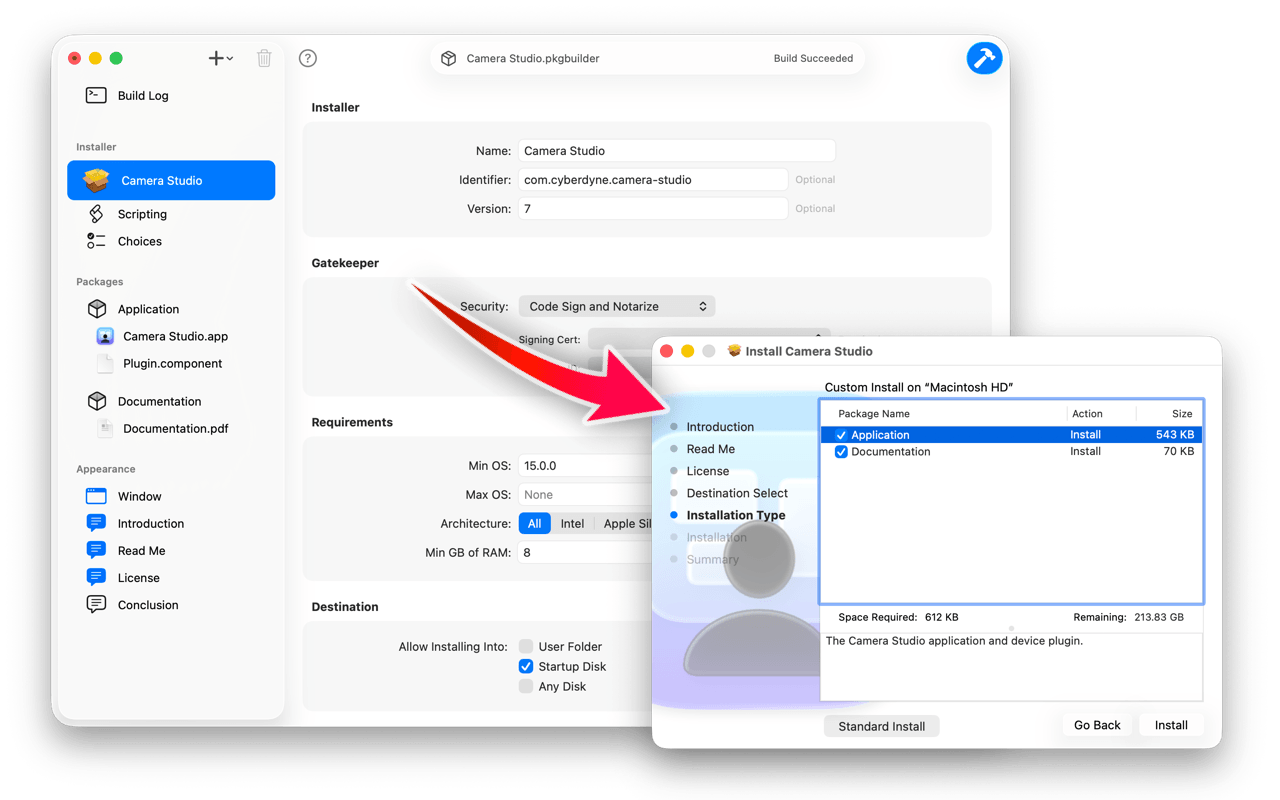
…Applications, Fonts, Screensavers, Automator workflows, Shortcuts, Extensions, Device Component Plugins, Sounds, Preference Panes, Input Managers, Color Pickers, Desktop Pictures, and anything else.
The specification v2.5 meticulously defines the and ultra-low power (ULPS) states, allowing the PHY to enter deep sleep conditions when no data is being transmitted. The ability to transition instantly between HS and LP modes is what gives MIPI D-PHY its legendary power efficiency.
The specification maintains backward compatibility with previous D-PHY versions. A v2.5 compliant IP block can generally auto-negotiate or be configured to operate at older data rates (e.g., v1.2 speeds) to interface with legacy processors or sensors.
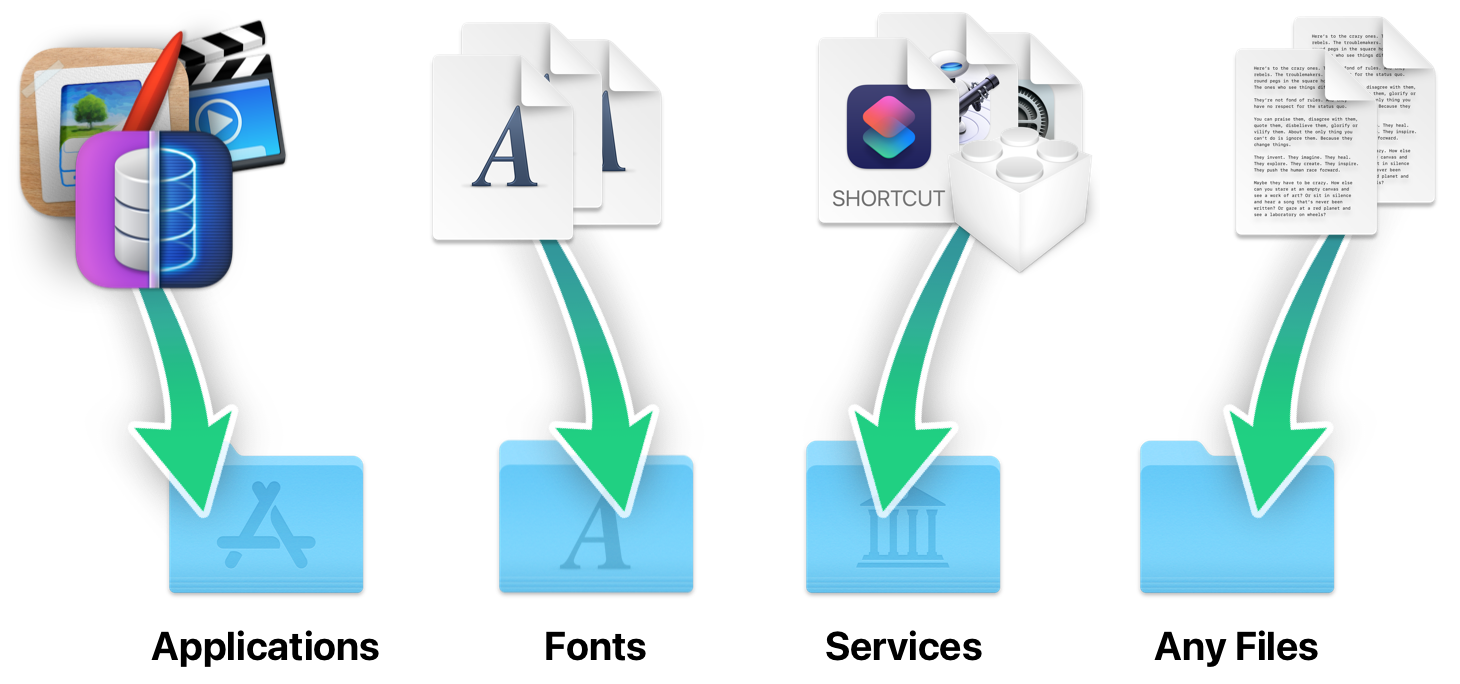
Set a custom background image for both light mode and dark mode interfaces.
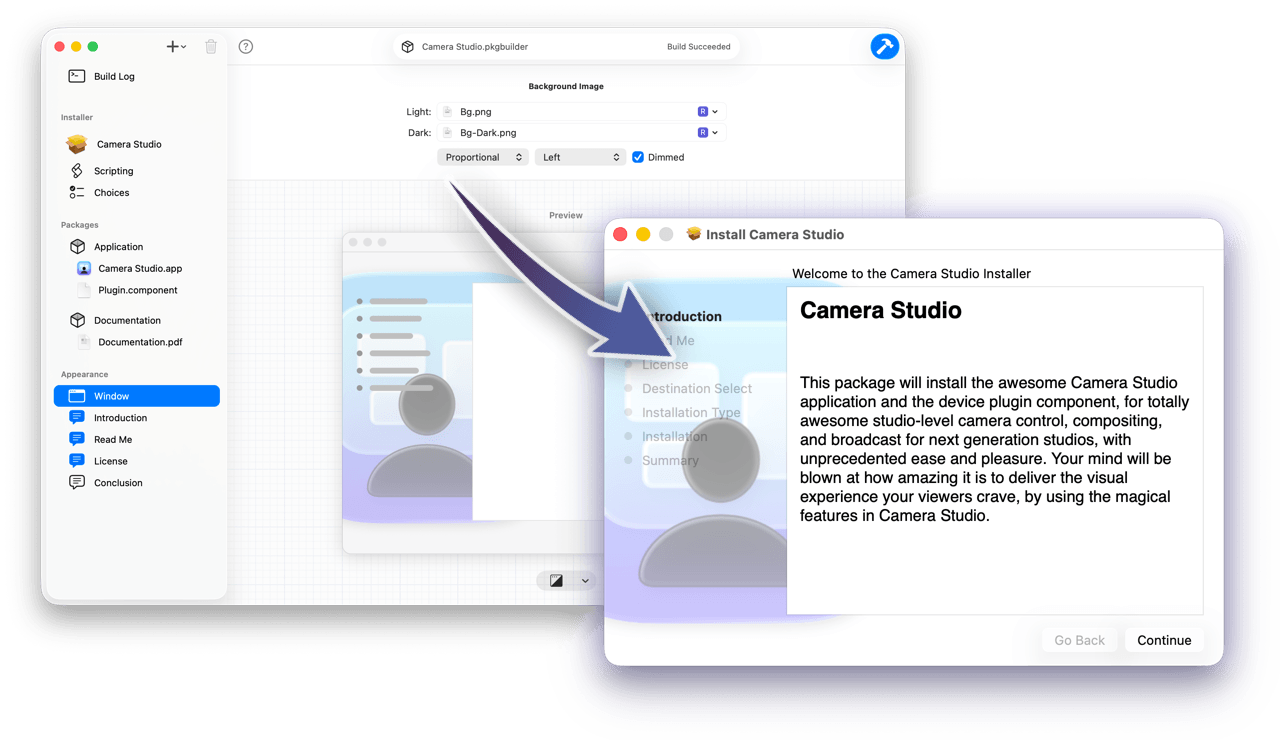
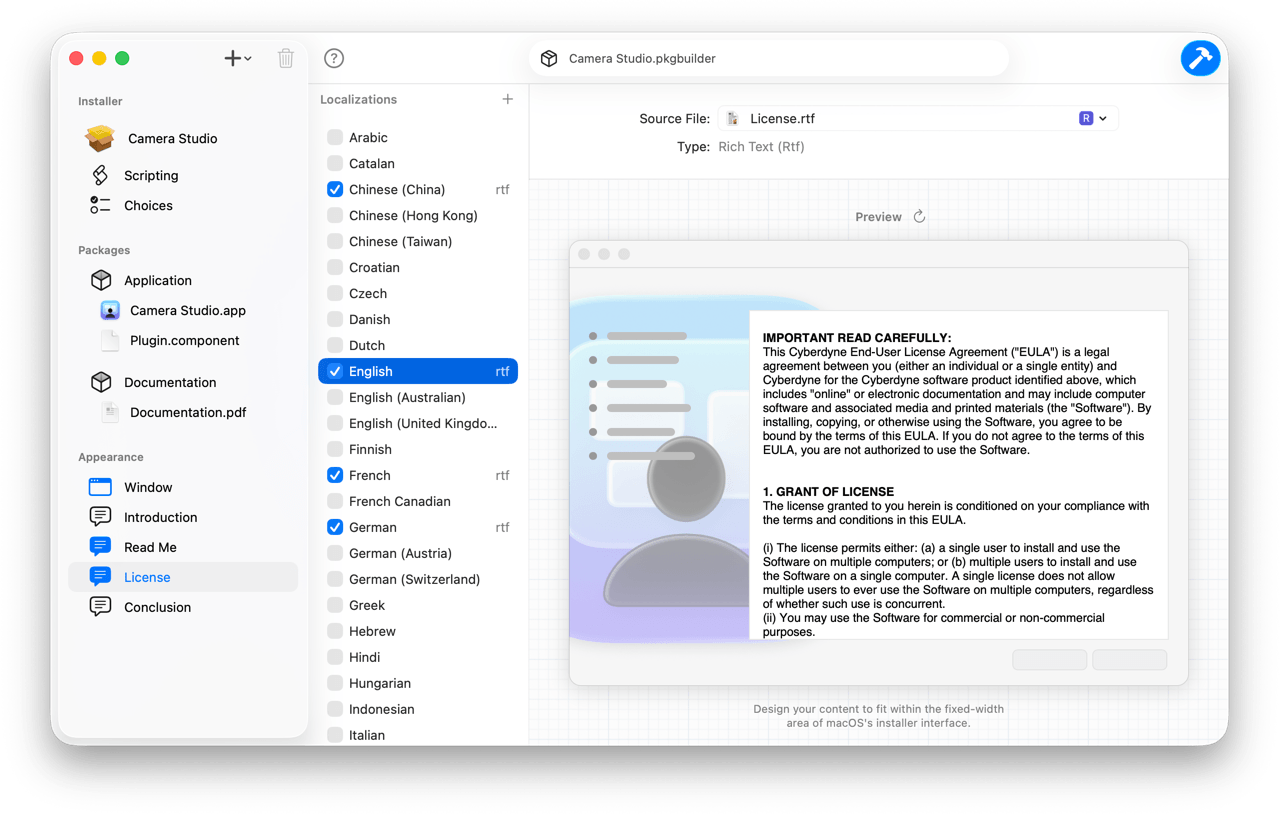
Add custom text.
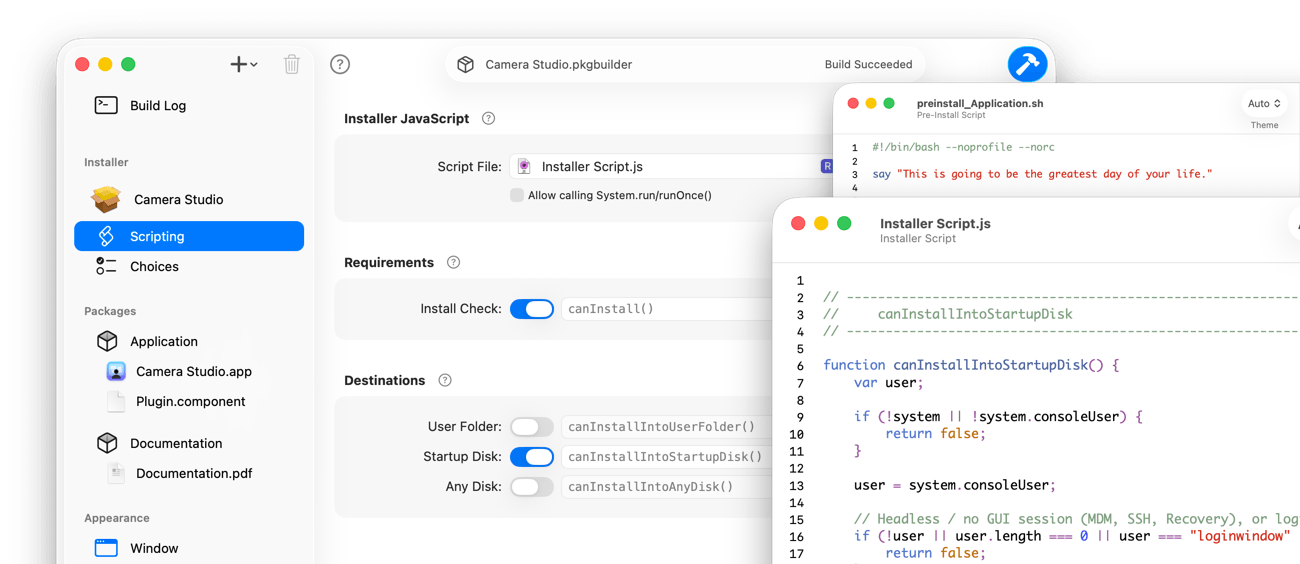
Customize the installer behavior with Installer JS scripting, and pre/post-install shell scripts. Figuring out exactly what command line arguments and environment variables there are to use is a cinch, because the built-in shell script editor conveniently lists them all with documentation.
Just like Apple does, when shipping your .pkg file, you may want to place it in a disk image .dmg with a beautiful background and perhaps a license agreement as well. Package Builder integrates with DMG Canvas which is the perfect tool for building your disk image. With this integration, building your disk image in DMG Canvas will now automatically build your installer in Package Builder, and place the .pkg file into your disk image, code signed, notarized, and ready to go.
Check Out DMG Canvas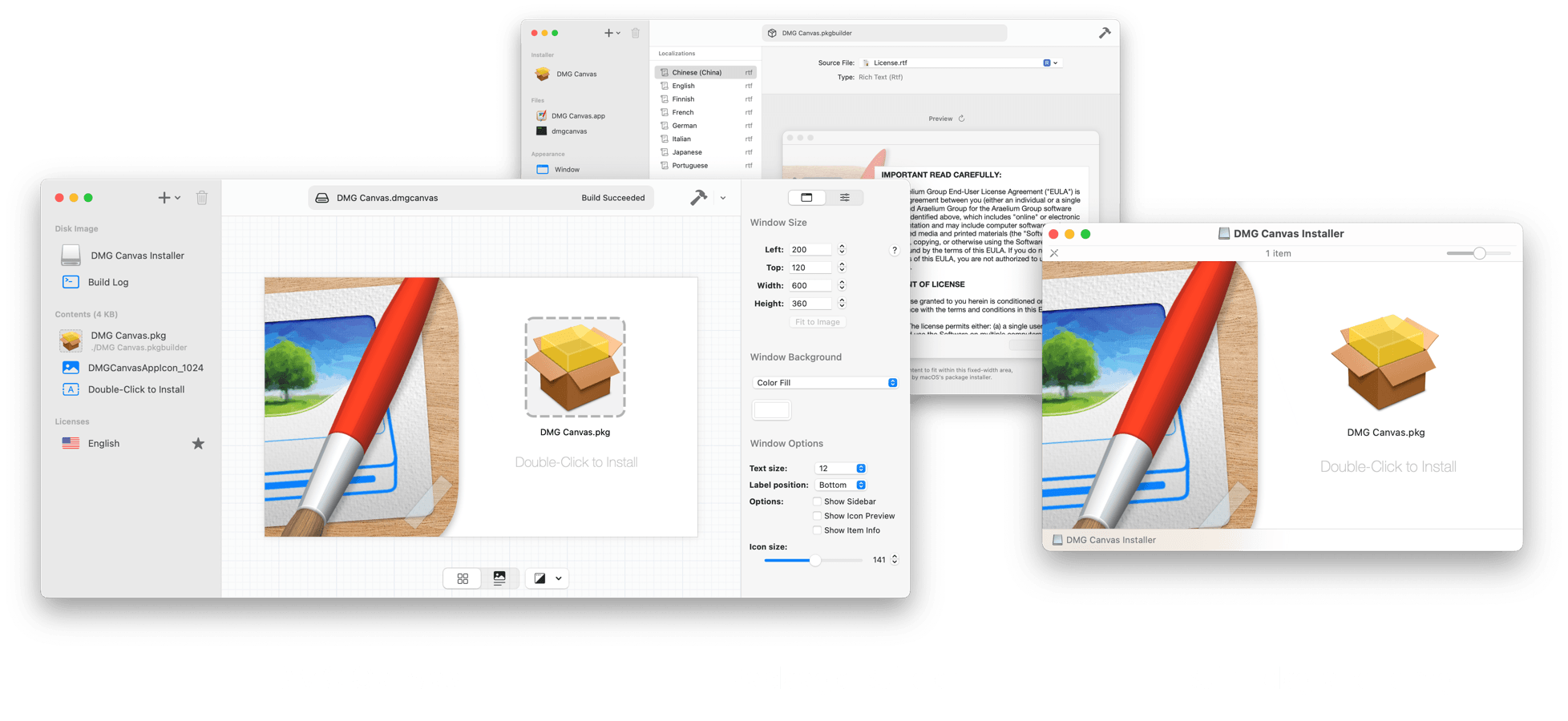
Package Builder's significance is in not requiring the command line to build an installer package, but of course you can absolutely automate it as part of your own build process using the pkgbuilder command-line tool, it's a trivial single call that Just Works.
By using the pkgbuilder tool, you can integrate building your pkg files into your normal build workflow, such as building an application in Xcode. Using the pkgbuilder tool is as simple as passing it the '.pkgbuilder' and the path to save your '.pkg' file to. That's it.