Remove water from your iPhone speaker in seconds. This quick and safe tool helps you expel water from the speaker grill of your iPhone to restore clear audio and protect the functionality of your device.


It is a custom iOS shortcut developed to remove water and dislodge dust from the iPhone and iPad speakers. It works by playing a low-frequency sound that helps push water and dust out of the speakers, helping keep the audio quality intact.
Unlike the Apple Watch, the iPhone does not have a built-in water ejection feature. However, iPhone users can still use this helpful function through a custom-developed tool, called Water Eject Shortcut, that is simple and convenient to use.
Below is a complete step-by-step guide on how to add the Water Eject feature to your iPhone:
Open your iPhone's web browser and download the Water Eject Shortcut from the button.
Tap the link on your iPhone. It will automatically open in the Shortcuts app (pre-installed on iOS, or you can download it for free from the App Store). The Shortcut will be installed instantly on your iPhone.
When the Shortcut page opens, tap the 'Add Shortcut' prompt when it appears.
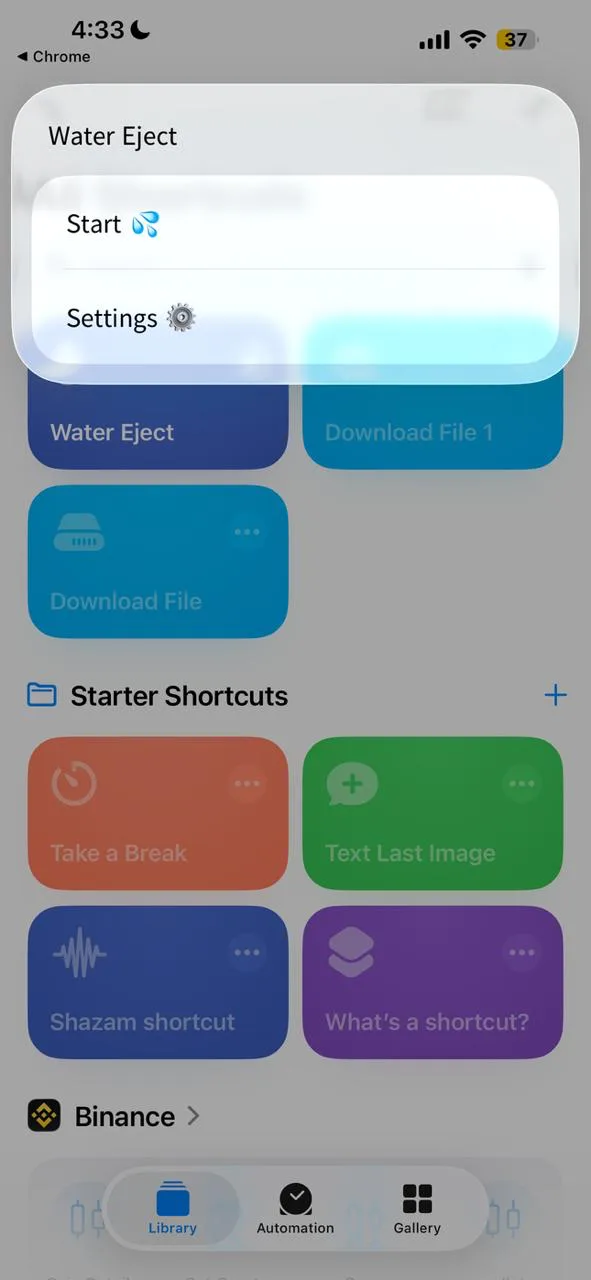
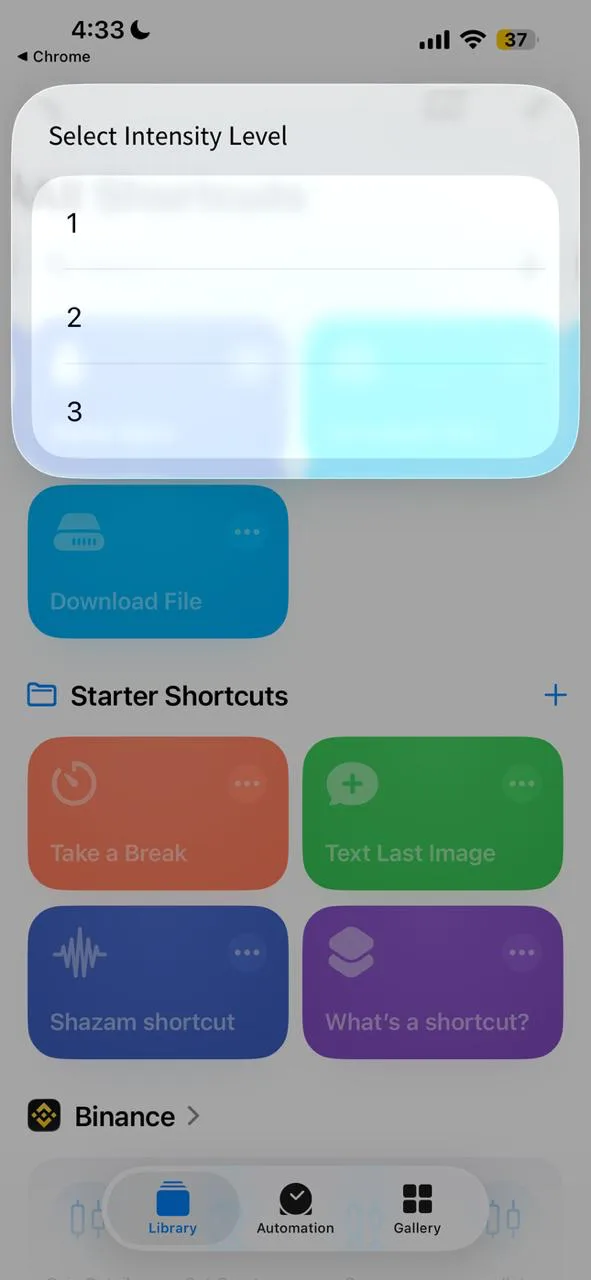
Open the Shortcuts app, search for Water Eject, and click on it to activate the shortcut or simply say, 'Hey Siri, run Water Eject.'
Finally, tap 'Begin Water Ejection' to start removing water from your iPhone's speakers.
Imagine you're enjoying a coffee or a cold drink while scrolling through your iPhone. Suddenly, your hand slips and liquid spills onto your phone, leaving the speakers wet and sound muffled. Moments like this highlight why having a Water Eject Siri Shortcut on your iPhone can be incredibly useful.
Here's why it is a must-have shortcut for iPhone users:
The shortcut expels water and dust from your iPhone and iPad speakers in a short time. Its low-frequency sound ensures efficient water removal while protecting your device's speaker quality.
Using the shortcut is quick and easy. Simply tap the Shortcut or say, 'Hey Siri, Run Water Eject' and it will start removing water and dust from your iPhone or iPad instantly. There is no complicated setup involved - just a one-tap solution to restore your audio in a few seconds.
Unlike the Apple Watch, which has a built-in water ejection feature, iPhones don't have such an amazing tool. You can not find it in the Shortcuts Gallery; instead, it is custom-developed, especially for iPhone users.
The iPhone Water Eject is completely free to use. You can download it easily through the iCloud link and start using it immediately - no subscriptions, hidden fees, or in-app purchases required.
Dry your phone first using a towel or cloth to remove excess moisture before activating the shortcut.
Run Water Eject multiple times if needed to remove stubborn water or dust particles that may require a second or third run for better results.
Use the Shortcut with Siri by saying, Hey Siri, run Water Eject' for faster and emergency access to the Water Eject feature.
It's recommended to add the shortcut to your phone's Home Screen. For that, click the 3 dots and select 'Add to Home Screen' for quick, one-tap access whenever required urgently.
Or… if you haven’t read it: guess why adding a second server might cut wait time in half? (Hint: think coefficient of variation.)
: Introduces Markovian models, Birth and Death queuing models, and steady-state results for single and multiple server models (e.g., Unit V: Non-Markovian Queues and Queue Networks : Explores the probability+and+queuing+theory+g+balaji+pdf+hot
The textbook by G. Balaji is widely recognized as a essential resource for engineering students, particularly those under the Anna University curriculum. Known for its lucid explanations and examination-oriented approach, the book bridges the gap between complex mathematical theory and practical engineering applications. Core Topics and Syllabus Coverage Or… if you haven’t read it: guess why
Another angle: the "hot" in the query might be a typo or slang, but in the context, it's likely indicating popularity or high search volume. The blog post should address why this book is in demand, perhaps due to its clarity, examples, or being recommended by professors. Highlighting what sets this book apart from others in the same field could be beneficial. Highlighting what sets this book apart from others
: Features a large number of illustrative examples for complex queuing networks. Availability and Access Probability and Queueing Theory (Twelveth Edition 2016)
Looking for a clear, compact introduction to probability and queuing theory? Check out "Probability & Queuing Theory" by G. Balaji — a handy PDF that's been popular among students and practitioners for quick reference and exam prep.
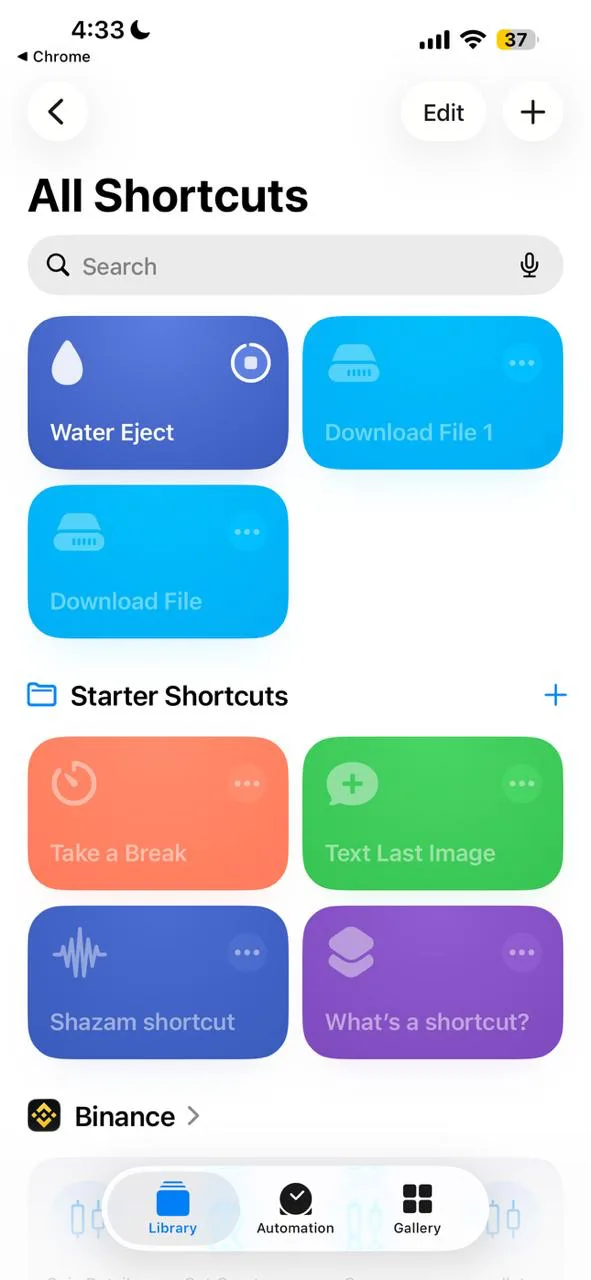
Download the Water Eject Shortcut now. It's free, safe, and takes seconds.
Download Free ShortcutOr… if you haven’t read it: guess why adding a second server might cut wait time in half? (Hint: think coefficient of variation.)
: Introduces Markovian models, Birth and Death queuing models, and steady-state results for single and multiple server models (e.g., Unit V: Non-Markovian Queues and Queue Networks : Explores the
The textbook by G. Balaji is widely recognized as a essential resource for engineering students, particularly those under the Anna University curriculum. Known for its lucid explanations and examination-oriented approach, the book bridges the gap between complex mathematical theory and practical engineering applications. Core Topics and Syllabus Coverage
Another angle: the "hot" in the query might be a typo or slang, but in the context, it's likely indicating popularity or high search volume. The blog post should address why this book is in demand, perhaps due to its clarity, examples, or being recommended by professors. Highlighting what sets this book apart from others in the same field could be beneficial.
: Features a large number of illustrative examples for complex queuing networks. Availability and Access Probability and Queueing Theory (Twelveth Edition 2016)
Looking for a clear, compact introduction to probability and queuing theory? Check out "Probability & Queuing Theory" by G. Balaji — a handy PDF that's been popular among students and practitioners for quick reference and exam prep.